The be_coming
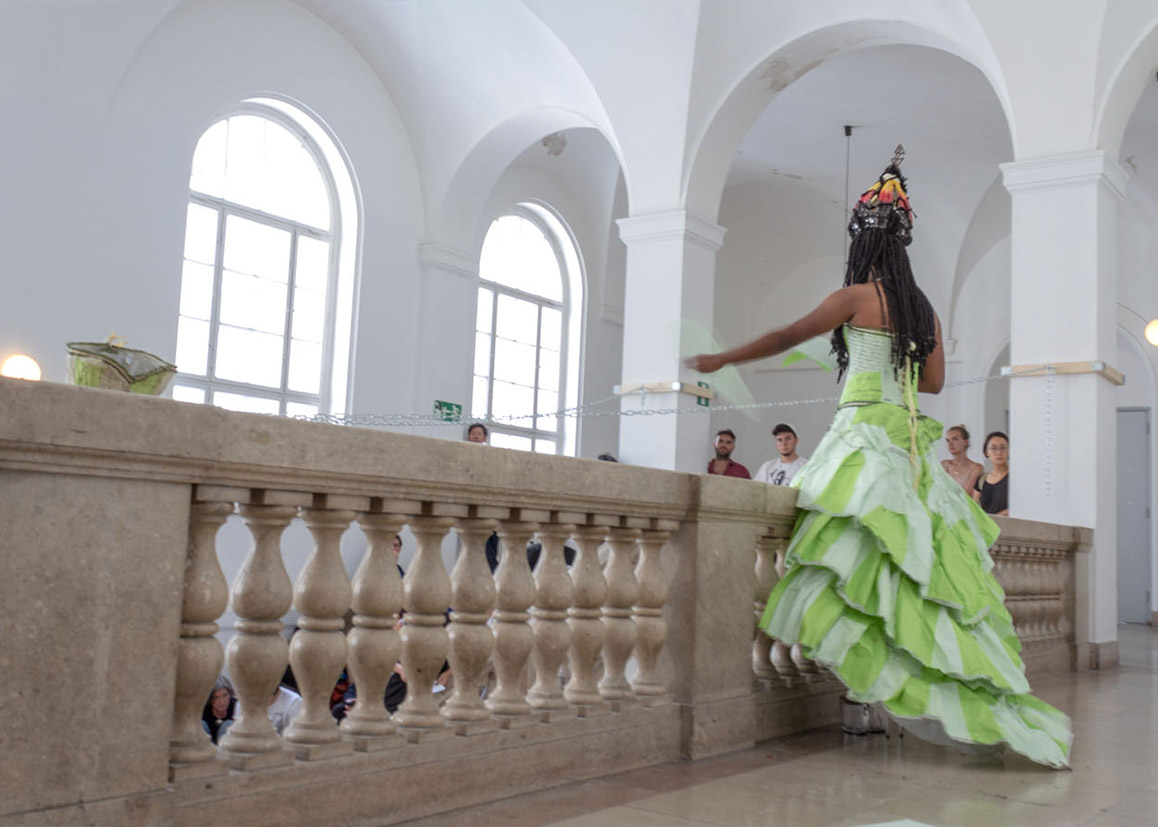
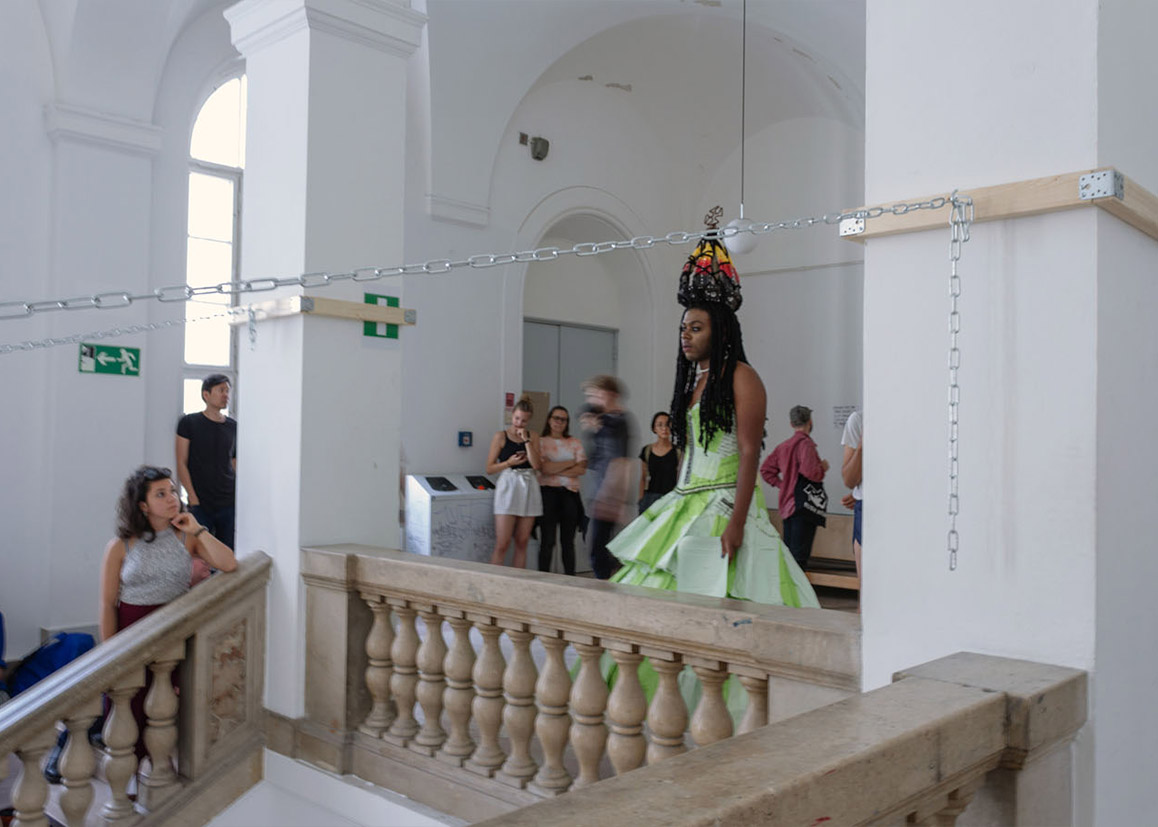
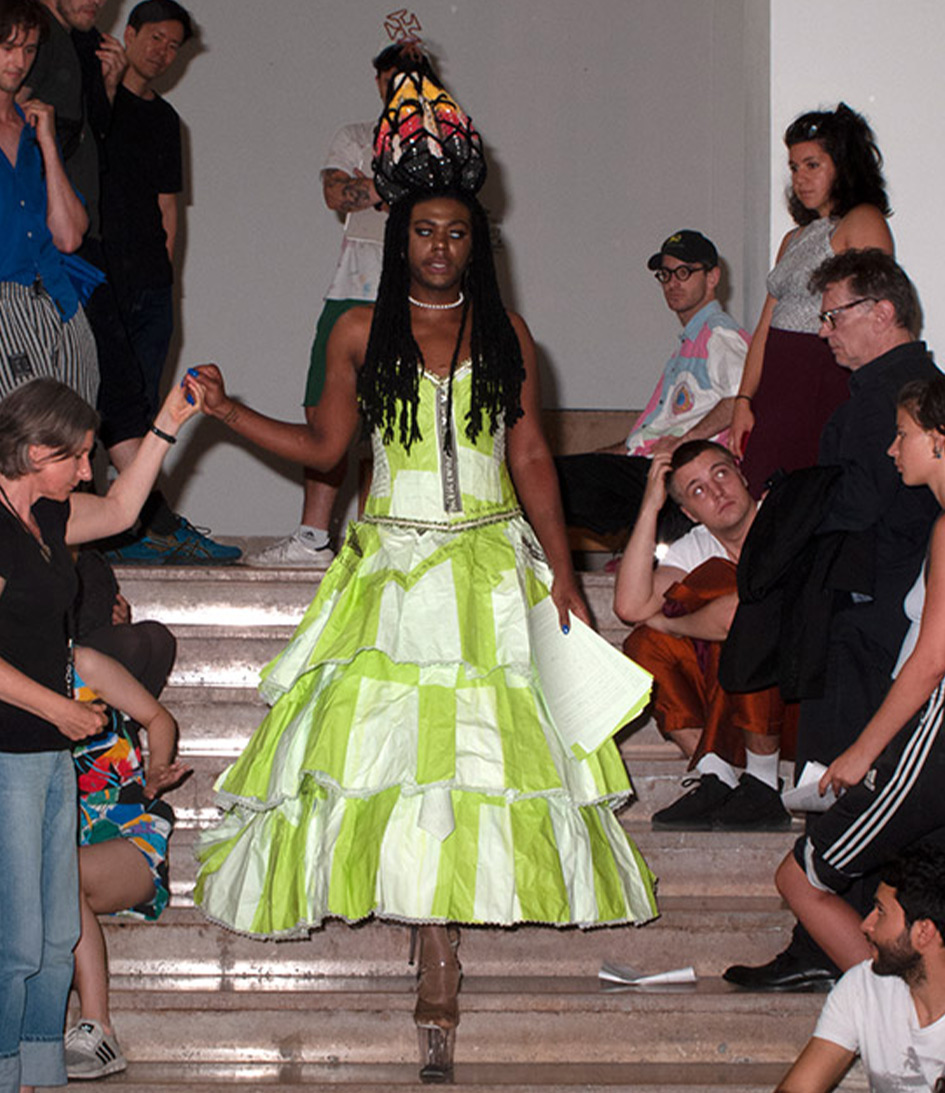
The performance is the third part of the research project “Rite of Passage: The Graduation Ceremony, The Crowning, or The be_coming.” Drawing on elements of the acceptance of royal duty, coronation, political rallies, and quinceañeras, leo delivered a speech during the official committee evaluation of their graduation project.
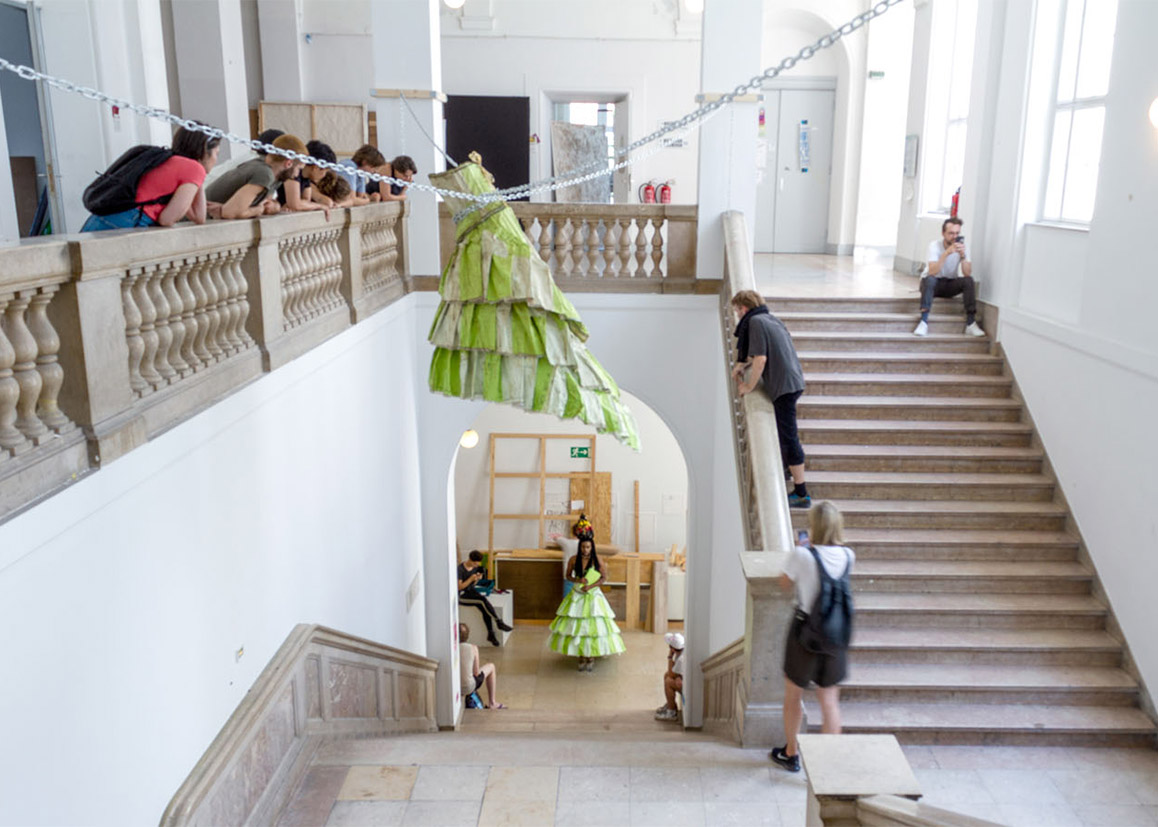
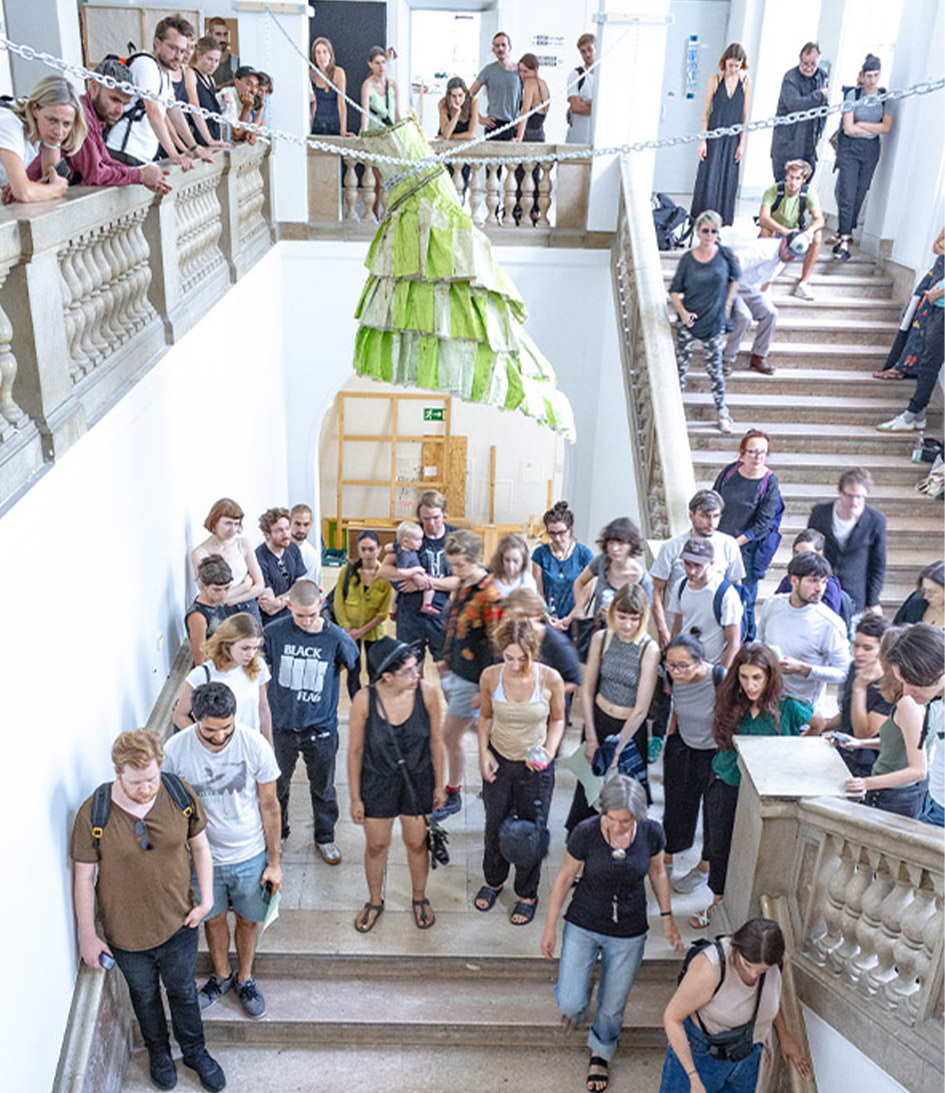
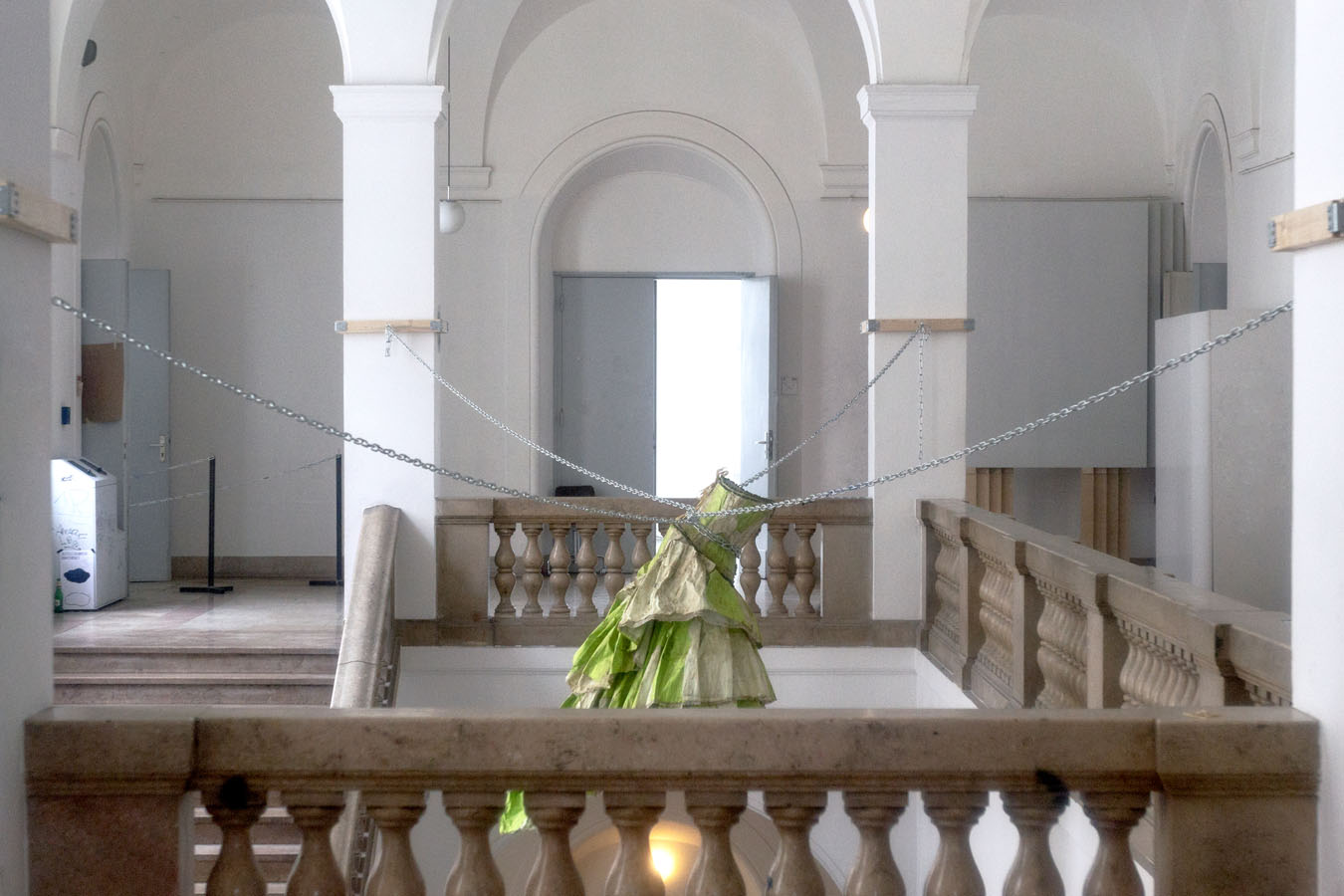
The ceremony took place at a staircase of the Universität der Künste Berlin, between the classes of New Media (Prof. Dr. Hito Steyerl) and Performance and New Media (Prof. Ming Wong). Both professors influenced leo’s stay at the UdK and their graduation project. The delivered speech revolves around the graduation process and the refusal to comply with stereotypical ideals of artisthood, which have been racialized and employed through colonization to reconstruct non-Western European sensibilities.
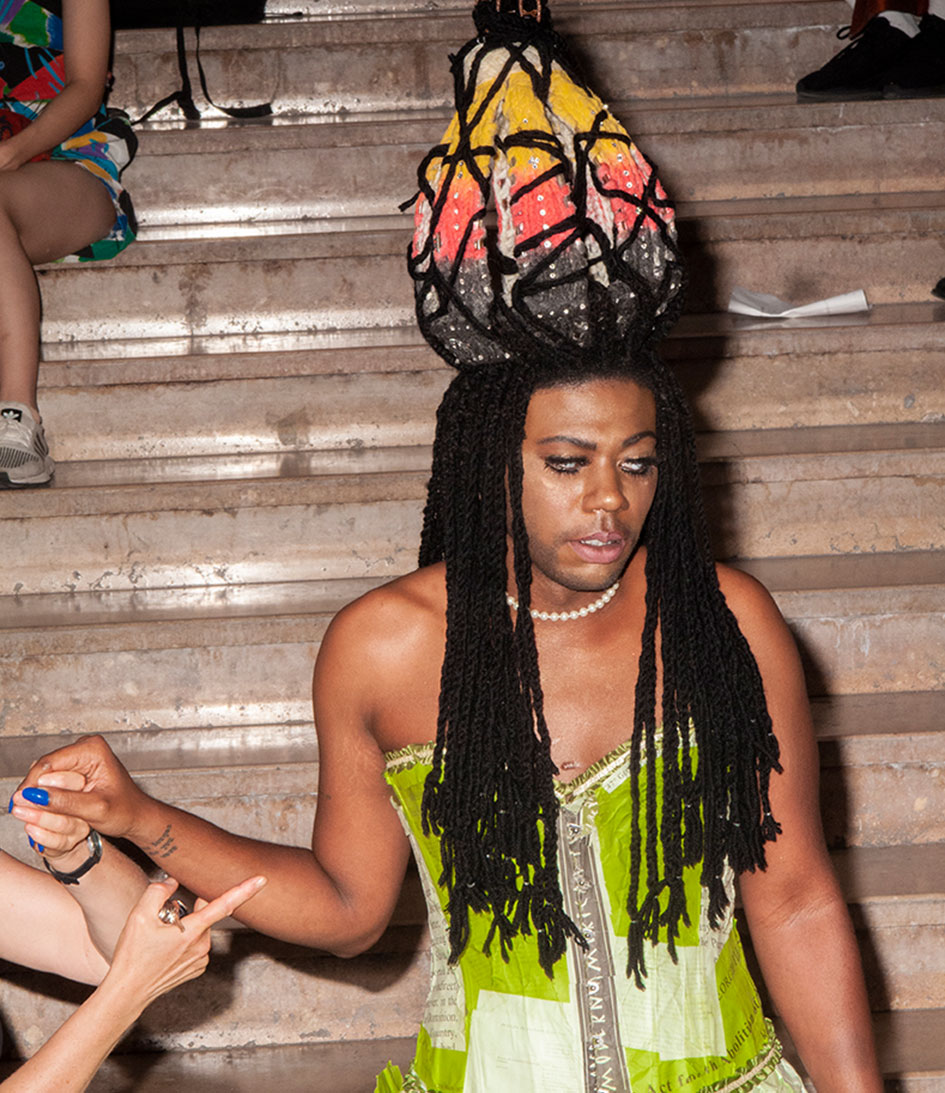
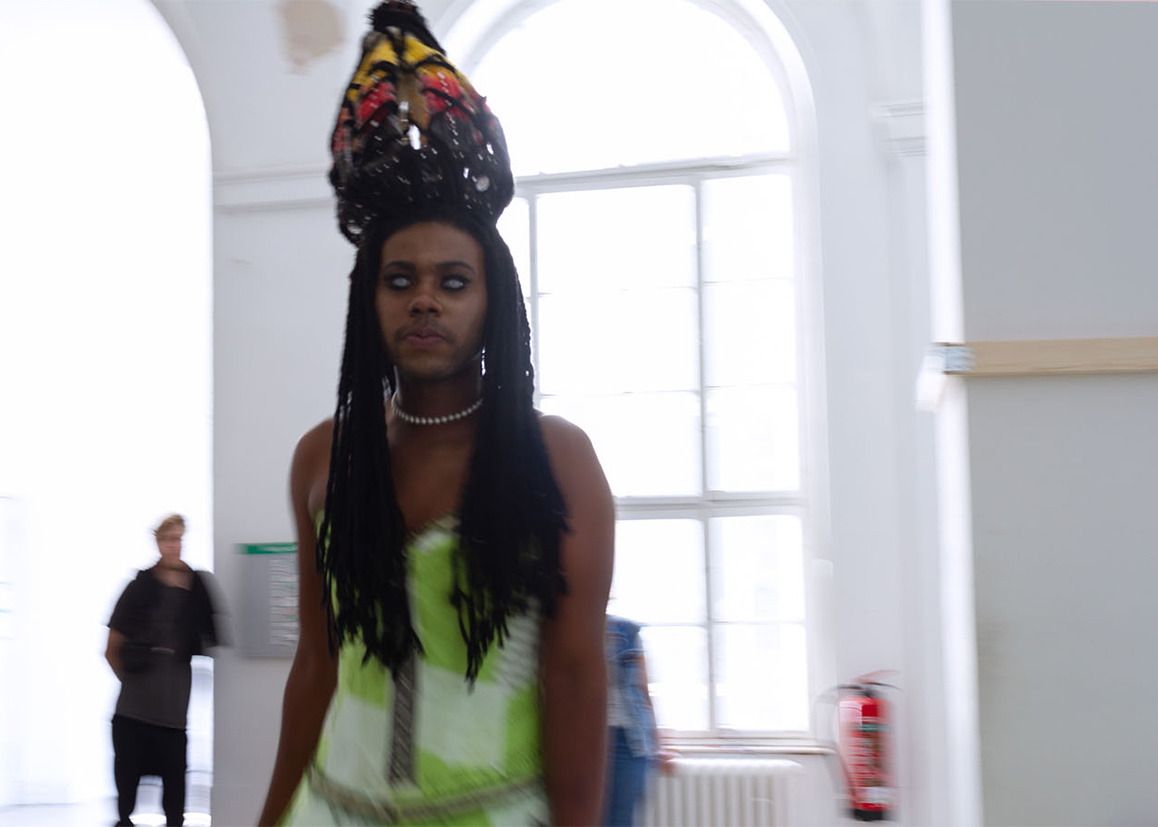
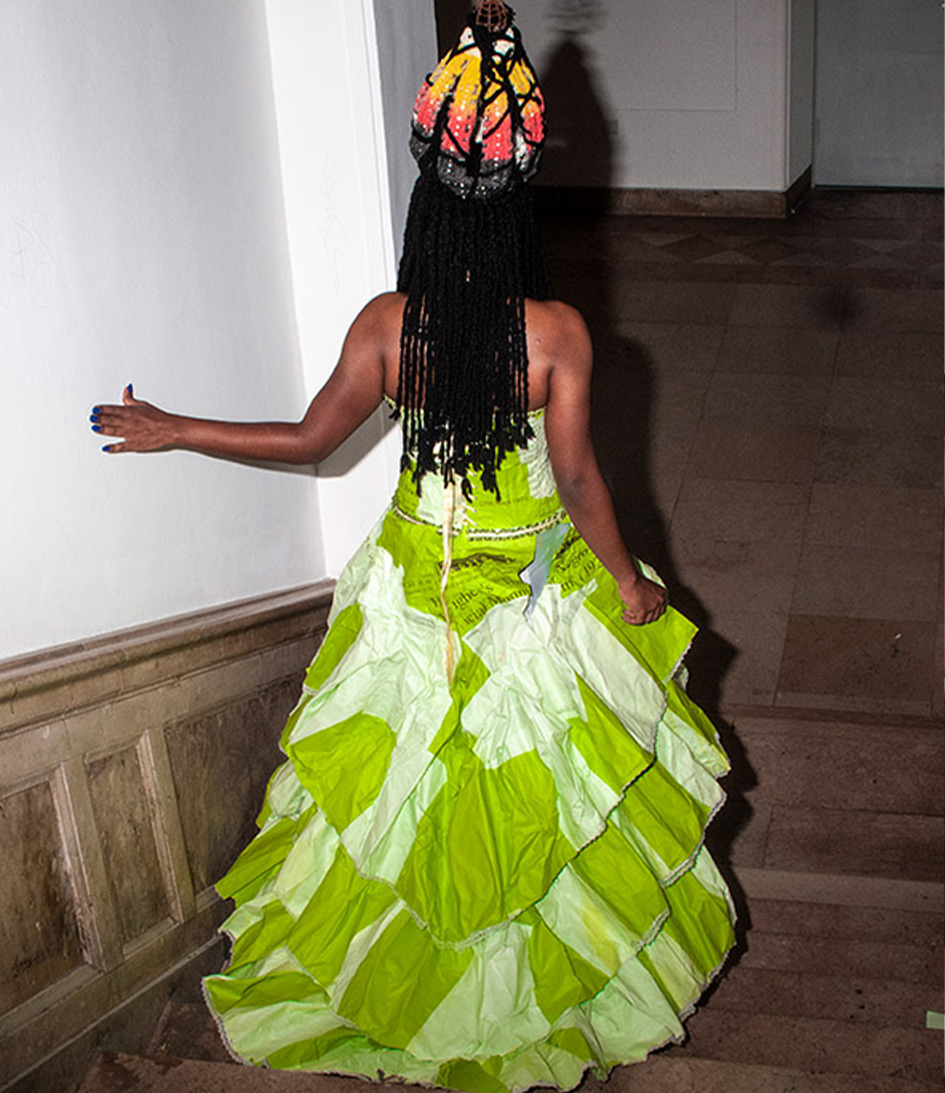
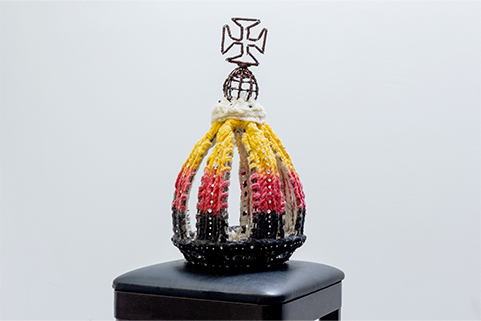
Andromeda, the installation with a paper dress and xeroxed texts treated with Brazilian coffee, served as both a scenic development and contextualization of the live act. Chained to the columns of the institution, the piece presents a double of the same dress worn by leo during the performance and refers to the story of Black Andromeda, the Ethiopian princess. On their head, the Crown gestures to the entanglement of colonial histories and modalities of neocolonial exploitation by mixing the shape of the first Brazilian imperial crown with an inverted German flag painted on top of Turkish yarn.